
VIN Decoder API for Business Vehicle Data
ESPData delivers business-grade VIN decoding, Plate-to-VIN lookup, and vehicle data infrastructure for lenders, insurers, fleets, auctions, parts teams, and automotive software platforms.
ESP Data Solutions helps organizations turn vehicle identification numbers and license plates into accurate, structured automotive data for underwriting, claims, inventory, compliance, parts fitment, title workflows, and software automation.

Key VIN Decoder API Advantages
- Business-grade VIN decoding supports underwriting, insurance claims, parts fitment, inventory, compliance, title, and software workflows.
- Weekly vehicle data updates help reduce risk from mid-year production changes, fleet-only trims, commercial configurations, and manufacturer revisions.
- Connected VIN and Plate-to-VIN workflows help teams move from a plate or VIN to structured vehicle data without stitching together disconnected vendors.
Why Basic VIN Lookup Falls Short
Most VIN lookup tools were built to answer one simple question: what vehicle is this?
Business systems usually need more. A lender needs underwriting confidence. An insurer needs risk and claim validation. A parts distributor needs fitment data that matches the actual configuration. A fleet, auction house, dealer, or title-processing team needs vehicle data that can scale without creating manual review work.
That is the real category: automotive data solutions for underwriting, loan approvals, insurance quoting, inventory automation, parts lookup, recall compliance, and title workflows.
VIN decoding is the mechanism. Accuracy at the point of decision is the deliverable.
Whether you call it a VIN decoding API, a VIN decoding service, or a vehicle identification number decoder, the underlying requirement is the same: current, structured data that a business system can act on.
Where VIN Accuracy Breaks Down
Vehicle specifications by VIN change more often than many databases reflect. Manufacturers issue mid-year production changes, and commercial vehicles, fleet-only trims, trucks, motorcycles, trailers, buses, and RVs may be revised outside the passenger-vehicle cycles that basic providers optimize for.
For regulated and high-value workflows, stale data creates risk. The 49 CFR Part 565 VIN requirements and the ISO 3779 VIN structure standard define important identification frameworks, but businesses still need a data partner that keeps manufacturer-specific specifications current and operationally usable.
Example: Why VIN Accuracy Matters
A lender pulls a VIN during underwriting and the decode returns the base trim instead of the actual commercial or fleet-configured trim. That single mismatch can understate the vehicle’s value, misclassify the loan-to-value ratio, and trigger a manual review that delays approval. The same gap shows up in claims: an insurer pricing risk off an outdated engine or drivetrain spec may under- or over-price the policy before a human ever reviews the file. Accurate, current VIN data is what keeps these decisions automatic instead of manual.
ESP VIN Data Infrastructure Since 1994
ESP Data Solutions has built vehicle identification number decoding infrastructure since 1994, supporting lenders, insurers, fleets, and automotive software providers for more than 30 years.
Its database includes original data sheets dating back to 1981, more than one billion VINs decoded, and coverage across passenger cars, light and heavy trucks, motorcycles, trailers, buses, RVs, and specialty vehicle categories under one account.
ESP validates reports against ISO 3779 and NHTSA Title 49 standards, refreshes data weekly, and supports workflows that need dependable output instead of rough approximations. ESP’s VIN database is maintained from source data and updated to reflect manufacturer revisions as they are issued.
VinLiNK™, ESP’s core VIN decoder API, returns full 17-digit decodes and includes ACES parts-fitment mapping, helping parts, warranty, and repair systems reduce the need for a separate fitment data source. For parts teams, that can mean matching fitment to the correct engine, trim, and configuration before the wrong part enters the order flow.
What the VIN Decoder API Returns
A single VIN decode from ESP’s API can return structured fields including:
- Year, make, and model
- Trim level
- Body style
- Engine and drivetrain specifications
- Vehicle type (passenger, commercial, motorcycle, trailer, and more)
- GVWR and commercial indicators, where available
- ACES fitment mapping, where applicable
These fields can be delivered into underwriting systems, claims workflows, parts platforms, inventory tools, and automotive applications through ESP’s VIN data infrastructure.
Basic VIN Lookup vs. ESP VIN Decoder API
| Capability | Basic VIN Lookup | ESP VIN Decoder API |
|---|---|---|
| Data freshness | Static or infrequent updates | Weekly updates |
| Vehicle coverage | Often focused on passenger vehicles | Passenger vehicles, commercial vehicles, motorcycles, trailers, buses, RVs, and specialty categories |
| Output depth | Basic decode fields | Business-ready data including trim, GVWR, commercial indicators, ACES fitment, and more |
| Integration | Limited or manual workflows | API access and batch processing for high-volume vehicle data operations |
| License plate lookup | Often handled by a separate provider | Plate-to-VIN workflows supported through ESP vehicle data infrastructure |
License Plate → Plate-to-VIN → VIN Decoder → Vehicle Data → Business Decision
From a plate or VIN to a business decision: how ESPData connects vehicle identification, decoding, and operational data.
Built for Volume, Compliance, and Integration
Teams processing large vehicle sets can use ESP batch decoding for high-volume VIN files, including batch runs up to 250,000 VINs. Businesses can scale usage around seasonal demand, portfolio growth, claims volume, auction activity, or software platform growth.
Common VIN Decoder API Use Cases
- Lenders: Verify vehicle details before underwriting or loan approval.
- Insurers: Support quoting, claims review, risk assessment, and vehicle validation.
- Parts and repair teams: Match specifications and ACES fitment data to the correct vehicle configuration.
- Fleets and auctions: Automate high-volume inventory, condition, and compliance checks.
- Dealers and title teams: Strengthen vehicle records with validated identification data.
- Automotive software platforms: Build reliable vehicle data into applications through API-based infrastructure.
Start From a Plate When You Do Not Have the VIN
Not every workflow begins with a clean 17-character VIN. A repossession agent, claims team, dealer lot scanner, or field operator may start with a license plate.
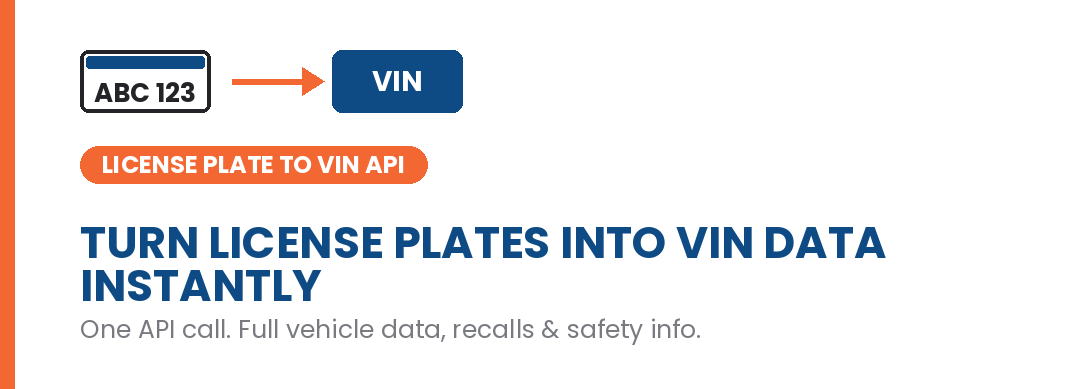
ESP’s Plate-to-VIN workflow is built and maintained by ESP Data Solutions on the same vehicle data infrastructure as VinLiNK™. It returns the associated VIN and can pass it directly into the same decoding engine for a complete vehicle profile. That means one data relationship can support both license plate lookup and VIN decoding, reducing vendor sprawl while keeping the underlying accuracy standards consistent.
Who Is ESP Best For?
ESP is best for organizations that rely on vehicle data to make financial, compliance, operational, inventory, repair, or software decisions.
If a missed trim, stale configuration, incorrect commercial detail, or incomplete vehicle attribute creates downstream risk, ESP’s weekly updated VIN and Plate-to-VIN data is built for that environment.
Frequently Asked Questions
What is a VIN decoder API?
A VIN decoder API is an integration that turns a vehicle identification number into structured vehicle data, including specifications that business systems can use for underwriting, claims, inventory, parts, compliance, and customer workflows.
Why are weekly VIN data updates important?
Weekly updates help capture production changes, commercial configurations, fleet-only trims, and manufacturer revisions faster than static or monthly vehicle data sources.
Can ESP support high-volume VIN decoding?
Yes. ESP supports batch decoding for up to 250,000 VINs in a single run, making it practical for lenders, fleets, auctions, insurers, and software platforms processing vehicle data at scale.
Can the API decode commercial vehicles, trailers, motorcycles, and RVs?
Yes. ESP’s VIN decoder API covers passenger cars, light and heavy trucks, motorcycles, trailers, buses, RVs, and specialty vehicle categories under one account, going beyond the passenger-vehicle-only coverage that basic VIN lookup tools typically offer.
Why Organizations Choose ESP
- Vehicle data infrastructure built since 1994
- Weekly data updates
- More than one billion VINs decoded
- Plate-to-VIN workflows available from the same vehicle data infrastructure
- ACES parts-fitment mapping
- Coverage of commercial vehicles, motorcycles, trailers, buses, and RVs
- Batch processing up to 250,000 VINs per run
- Flexible support for API, batch, and business-system integration needs
Talk to ESP Data Solutions
Need accurate, weekly updated VIN decoder API and license plate lookup data for underwriting, compliance, operations, or automotive software?
Whether your workflow starts with a VIN or a license plate, ESP delivers accurate vehicle data designed for high-volume business operations.